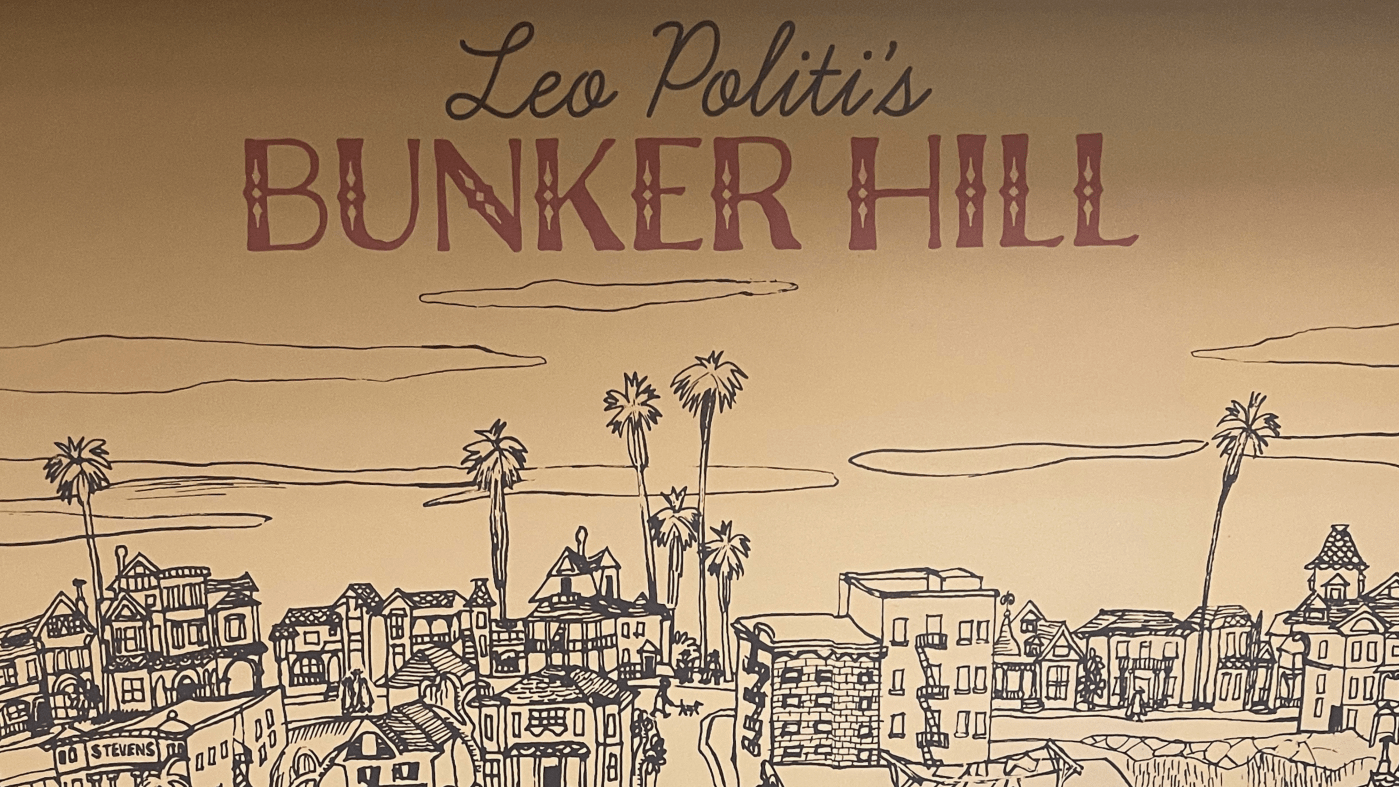
The next time you’re in the Central Library be sure to head up to the Children’s Literature Department to see a handful of paintings and sketches by artist Leo Politi (1908–1996), a children’s book artist known for his whimsical scenes of Los Angeles.
Politi painted this particular series to memorialize the people, landmarks and stories of Bunker Hill, a downtown neighborhood in Los Angeles (mostly) demolished in the 1960s. As Politi explained, “At first I did this because I wanted to preserve memories of the Hill I truly loved.” Encouraged by friends, he published his paintings in the 1964 book “Bunker Hill Los Angeles.” I’m grateful to have a copy of this gorgeous book because his commentary and memories bring to life his illustrations of Bunker Hill, before the neighborhood was lost to the wrecking ball.
And while I love having the published form of his Bunker Hill memories, I still take every opportunity to see his original paintings in person in order to zoom in on all the tiny details that are blurred when paintings are reduced to the size of a book. In fact, my favorite part of the LAPL exhibit is this Politi sketch of Bunker Hill (from the book’s endpapers) that has been enlarged to fit a whole wall. If you look closely, you can even spot the artist himself. 🙂
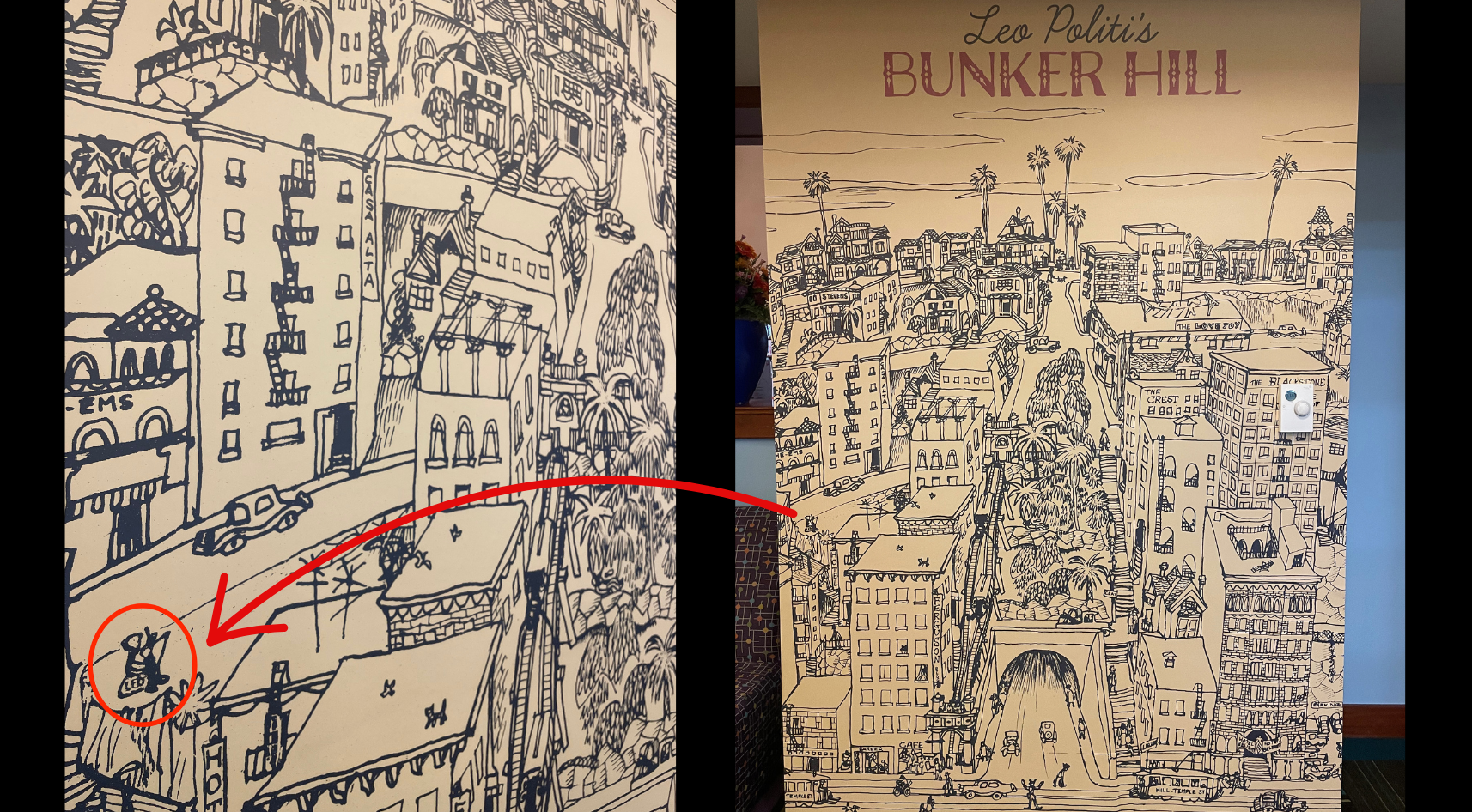
The book ends with this much-needed reminder from Leo Politi about the importance of historic preservation, which sadly still rings true today:
“Can we really call it progress when it means the extinction of our leading landmarks of known historical, esthetic, and sentimental values? Is it progress that destroys the natural contours of our hills and eradicates our trees and orchards? I don’t believe this is necessary. By destroying all our islands of heritage we are not only erasing the continuity of our city’s history, but above all we are denying our children the precious knowledge of the past which would greatly enrich their lives. In ending I would like to say that what little value this work may have, it has been a work of love and also of protest.” — Leo Politi
 Victoria Bernal
Leave a comment