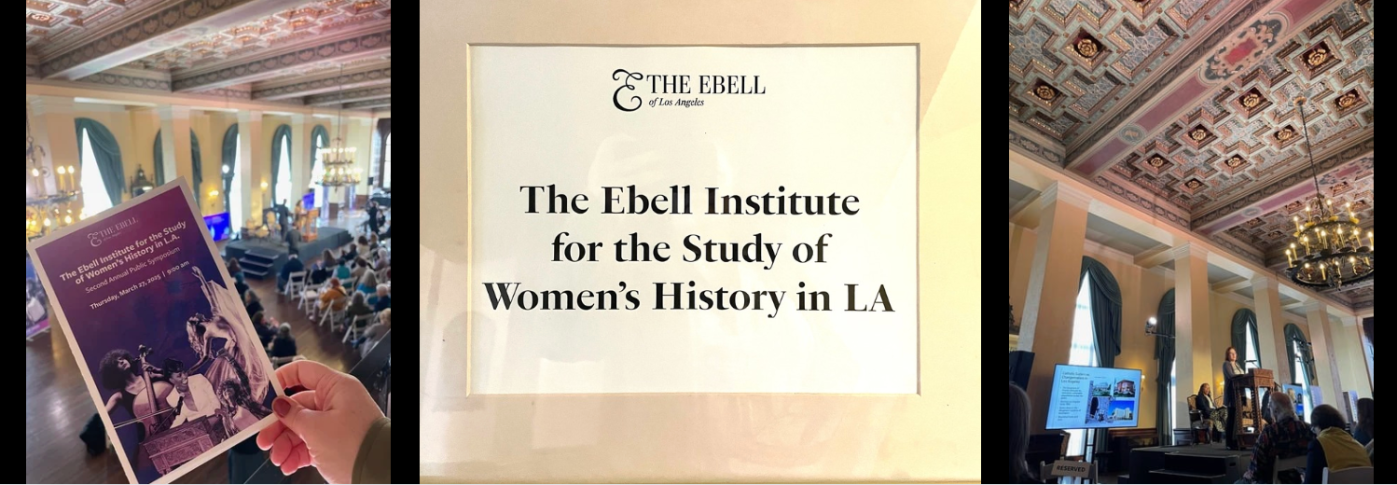
In March, I had the pleasure of presenting at the symposium for The Ebell Institute for the Study of Women’s History in Los Angeles. It was an honor to present my research about the first National Women’s Air Derby (1929) in this historic women’s clubhouse built in 1927. Should mention that one of those Powder Puff Derby pilots was Amelia Earhart, who made her final public appearance at The Ebell before disappearing in 1937.
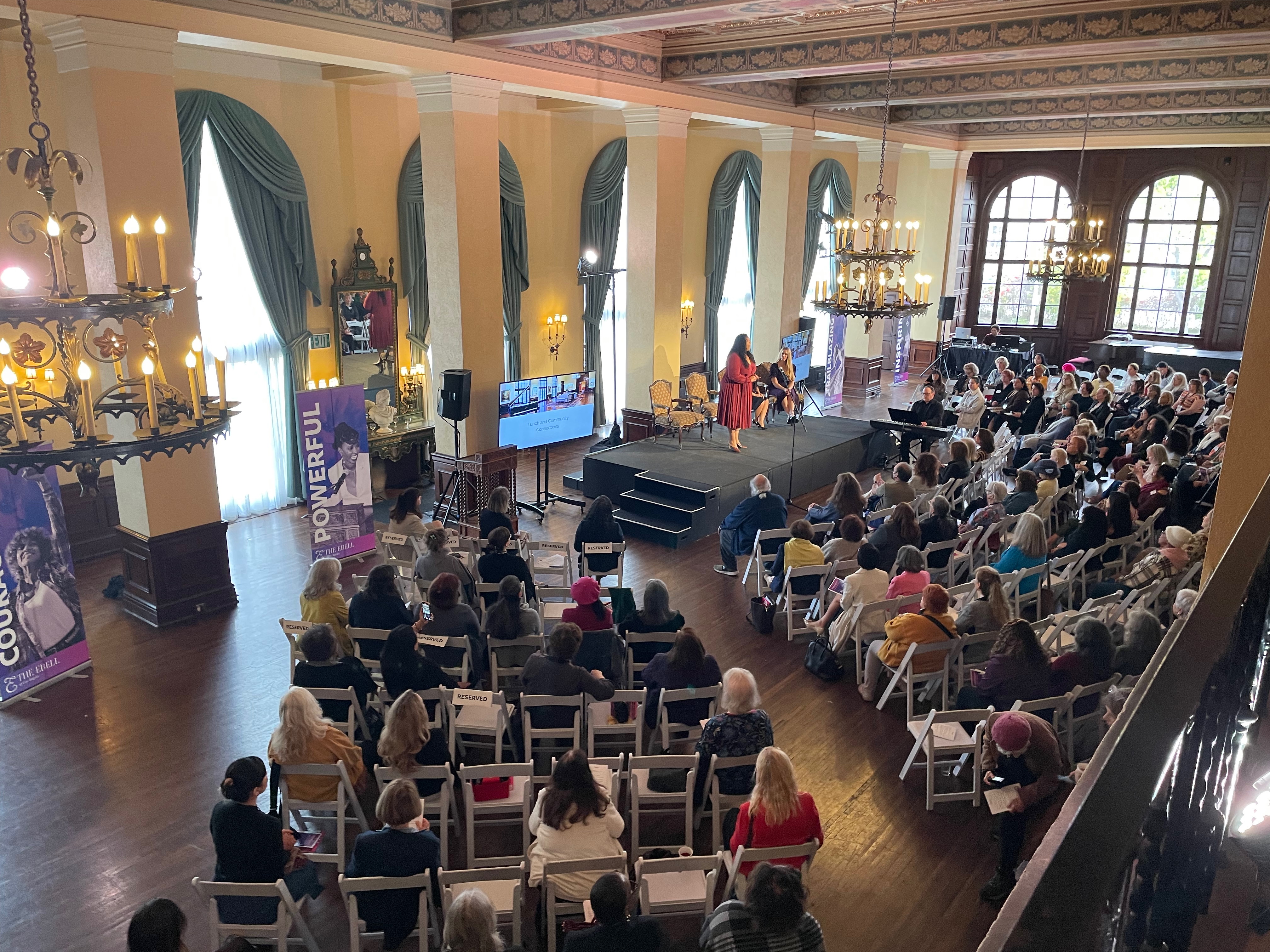
A brief summary of those women’s stories that we heard on that inspired day:
- Academic Meredith Drake Reitan shared the stage with art historian Monica Jovanovich and conservationist Kiernan Graves to discuss the frescoes by artist Maxine Albro (1893–1966) discovered under at least nine layers of paint.
- Preservationist Heather Goers spoke about architect Jean Roth Driskel. An excerpt from Goers’ research for FORT (Friends of Residential Treasures): “Jean Roth Driskel, FAIA (1915-1971), a woman architect who practiced primarily in Southern California in the mid-20th century. Although her work has been celebrated for its high quality of design, Jean also played a significant role in advancing the profession of architecture, particularly as it related to opportunities for women.” (Follow link to the 114-page publication).
- Me: The First All Women’s Air Derby of 1929
- Attorney Romy Schneider discussed the first woman to practice law in Los Angeles — Elizabeth L. Kenney (1869–1956). From Schneider’s pamphlet about this suffragist: “Ms. Kenney also became a prominent speaker in the women’s suffrage movement and an outspoken advocate for the betterment of women’s rights under the laws of California.”
- In their presentation “The Shinning Stars of the Ebell,” Hollywood historians Sarah Clothier and Sloan De Forest shared the stories of women entertainers who once graced the Ebell stage, including Judy Garland (1922–1969) who was discovered at the Ebell.
- Filmmaker Judy Branfman delved into the life of her great-aunt Yetta Stromberg, the defendant in the Supreme Court case Stromberg v. California, a precedent-setting First Amendment case. Branfman shared footage from her documentary about Yetta Stromberg -> https://www.orangegrovesandjailsfilm.com.
- As a scholar on LA’s Daughters of Charity, Kristine Gunnell introduced Sister Alice Marie Quinn (1935–2017) who started St. Vincent’s Meals on Wheels, one of the largest meals on wheels in the country. Loved Gunnell’s quote: “The actions of Catholic sisters, like [Sister Alice Marie] Quinn, are often overlooked as changemakers in Los Angeles.”
- Kimberly Nao, Ph.D, spoke about educator Bessie Bruington Burke (1891–1968) who was born in Los Angeles and graduated from the Los Angeles Normal School, the city’s school for teachers. Burke became the city’s first African American teacher in 1911. And in 1918, she became LAUSD’s first African American principal.
- Author of the book “Abortion in the American Imagination,” Karen Weingarten presented a portrait of abortion-rights activist Lana Clarke Phelan.
- The day ended with an important workshop about the Los Angeles Women’s Landmarks Project, a partnership developed by the National Register of Historic Places and the Los Angeles Conservancy to increase the amount of women’s landmarks preserved in Los Angeles. Currently only 3% of LA’s 1,300 Historic-Cultural Monuments represent women’s history.

And while I was honored to share the stage with others passionate about women’s history in Los Angeles, I was also inspired by all the conversations with symposium attendees. So many women in the audience had such interesting histories of their own to share! Listen to more local women’s history on the Ebell podcast: https://www.ebellofla.org/podcast
 Victoria Bernal
Leave a comment