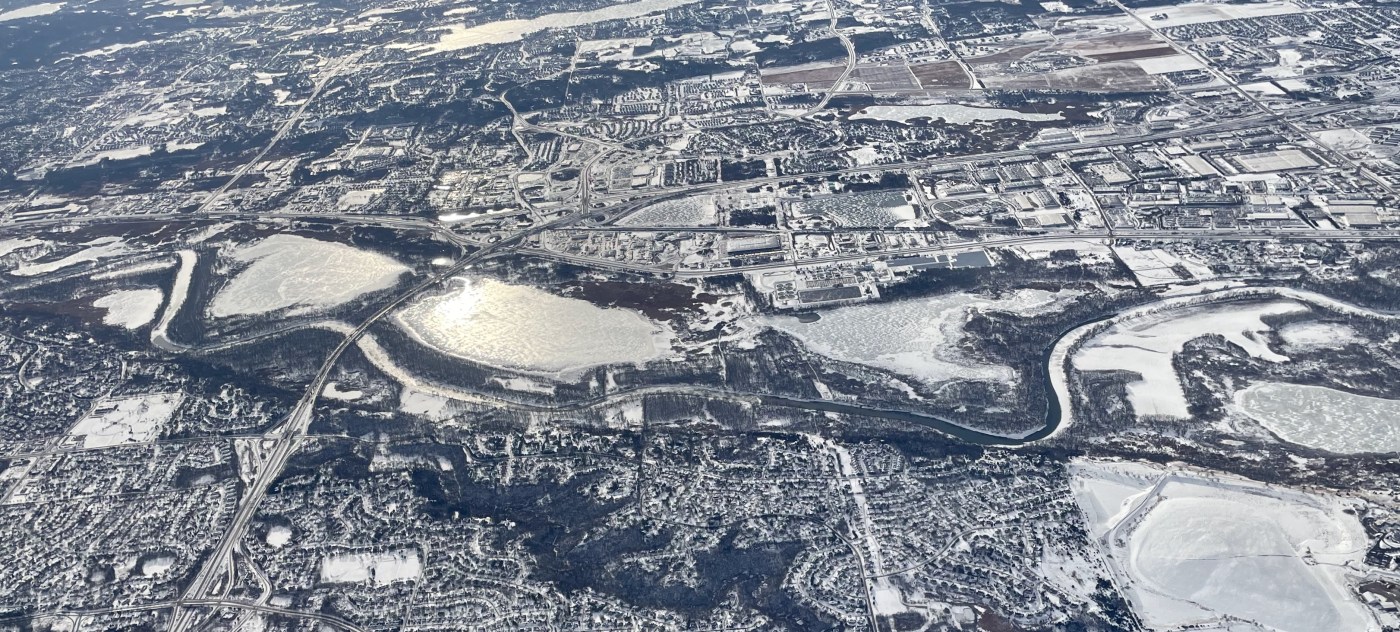
Spent this past Christmas holiday in the winter wonderland known as Minnesota. I feel incredible lucky to have spent another holiday with my aunt (now 90) in her cozy place in her snow-covered neighborhood. Most of my time was spent engaging in Christmas cheer in the homes of loved ones, though I did venture out to explore a few Minneapolis & St. Paul historic landmarks. Below are a few words and photos from these winter explorations to help jog my memory down the road:
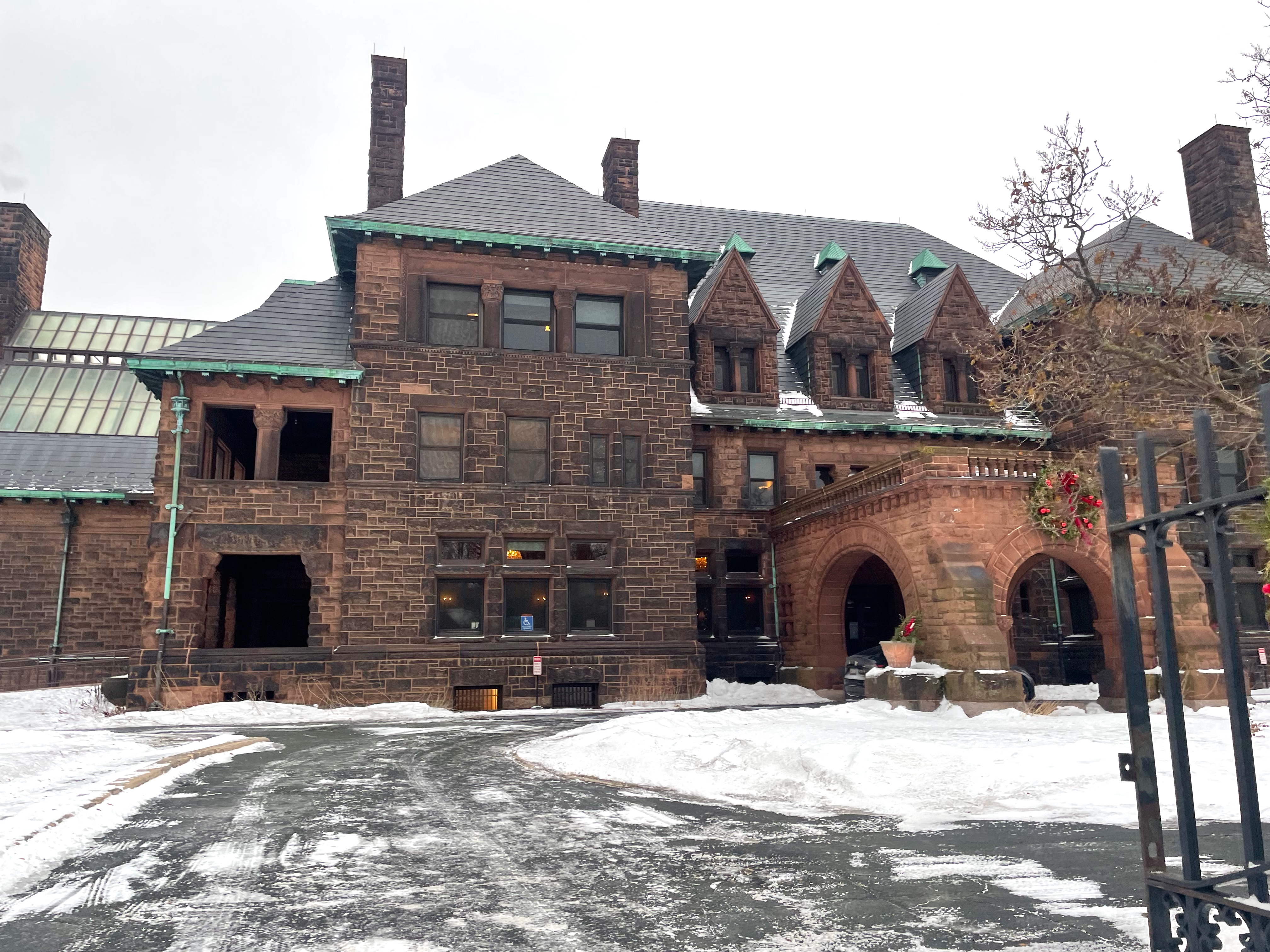
St. Paul’s James J. Hill House
The Gilded mansion of James J. Hill in St. Paul has been on my Twin Cities bucket list for some time, as the Minnesota Historical Society hosts festive holiday tours that often sell out. Built by railroad titan James J. Hill, this mansion was the largest house in Minnesota when it was completed in 1891. Hill, aka the Empire Builder, made his fortune as head of the Great Northern Railway and spent $931,275 to build this home that included 13 bathrooms, 22 fireplaces and a two-story art gallery.
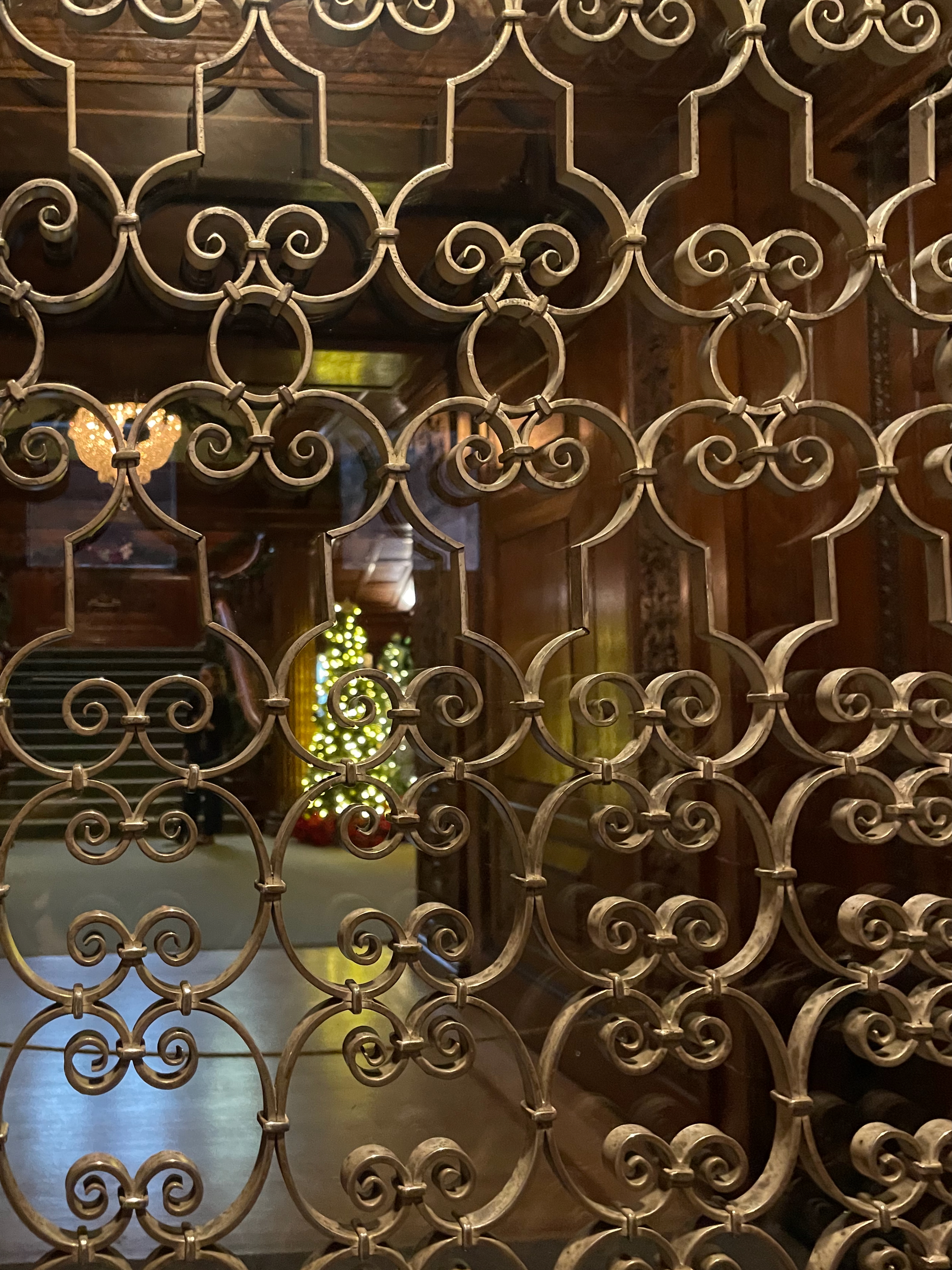
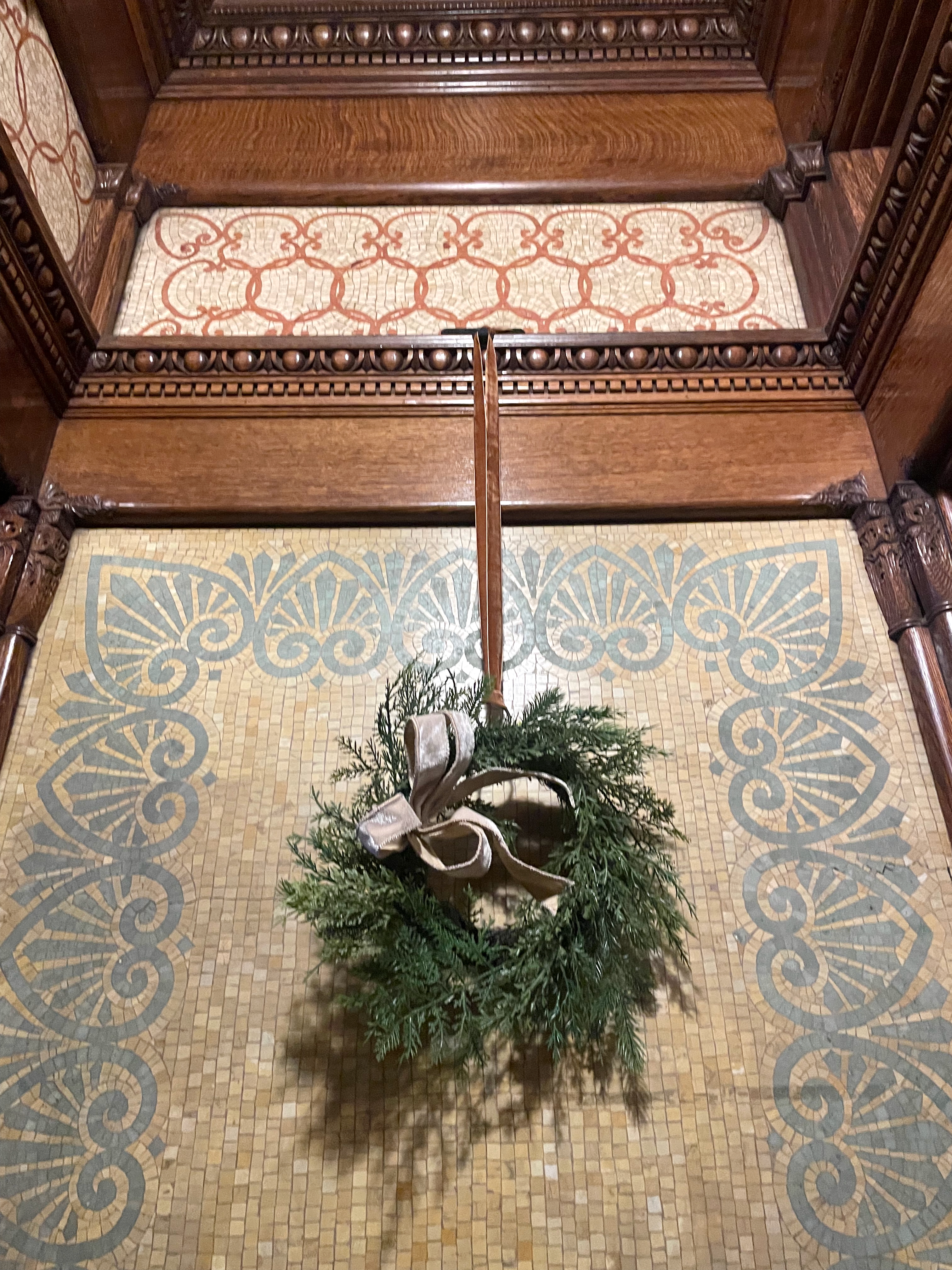
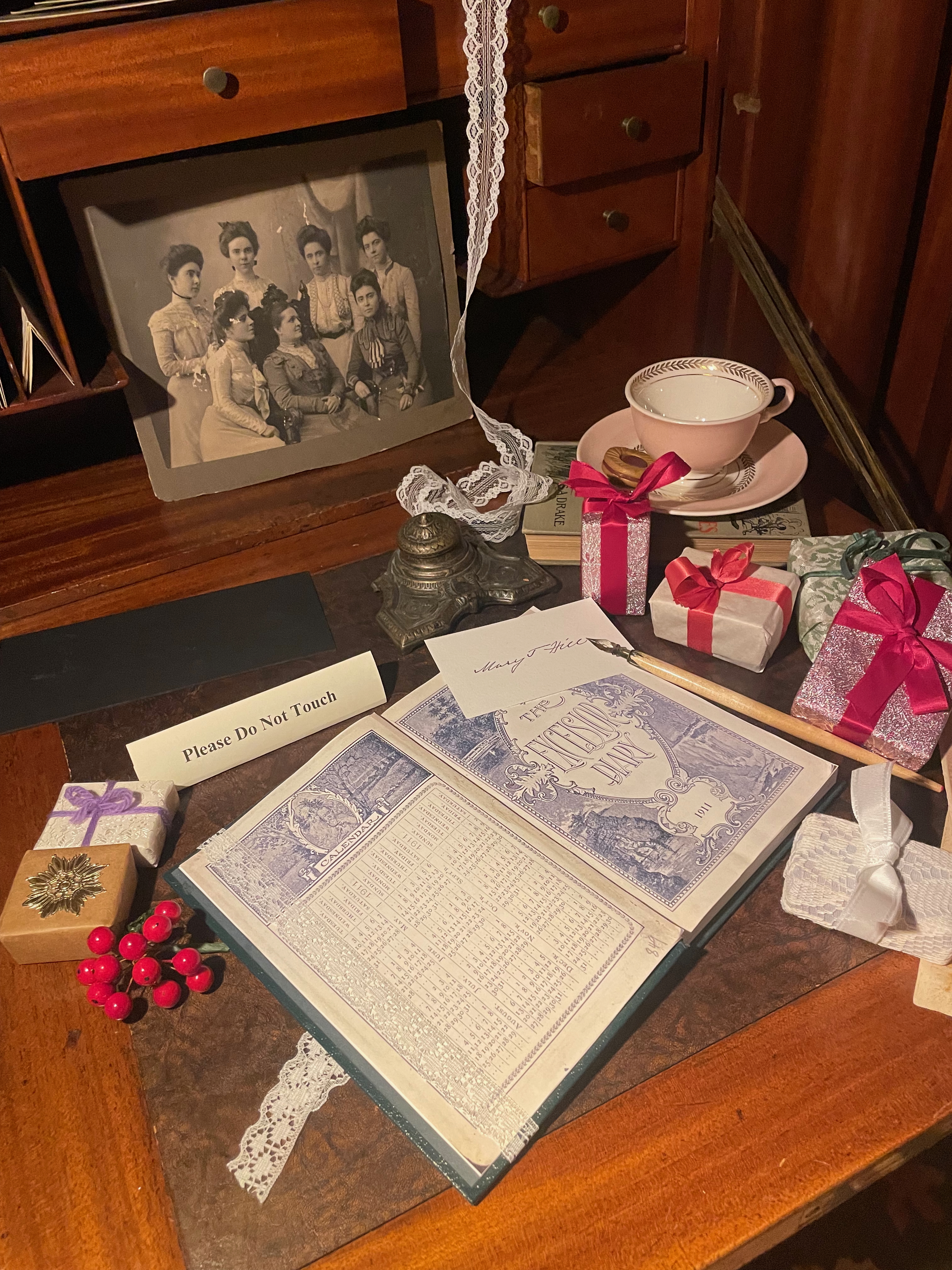
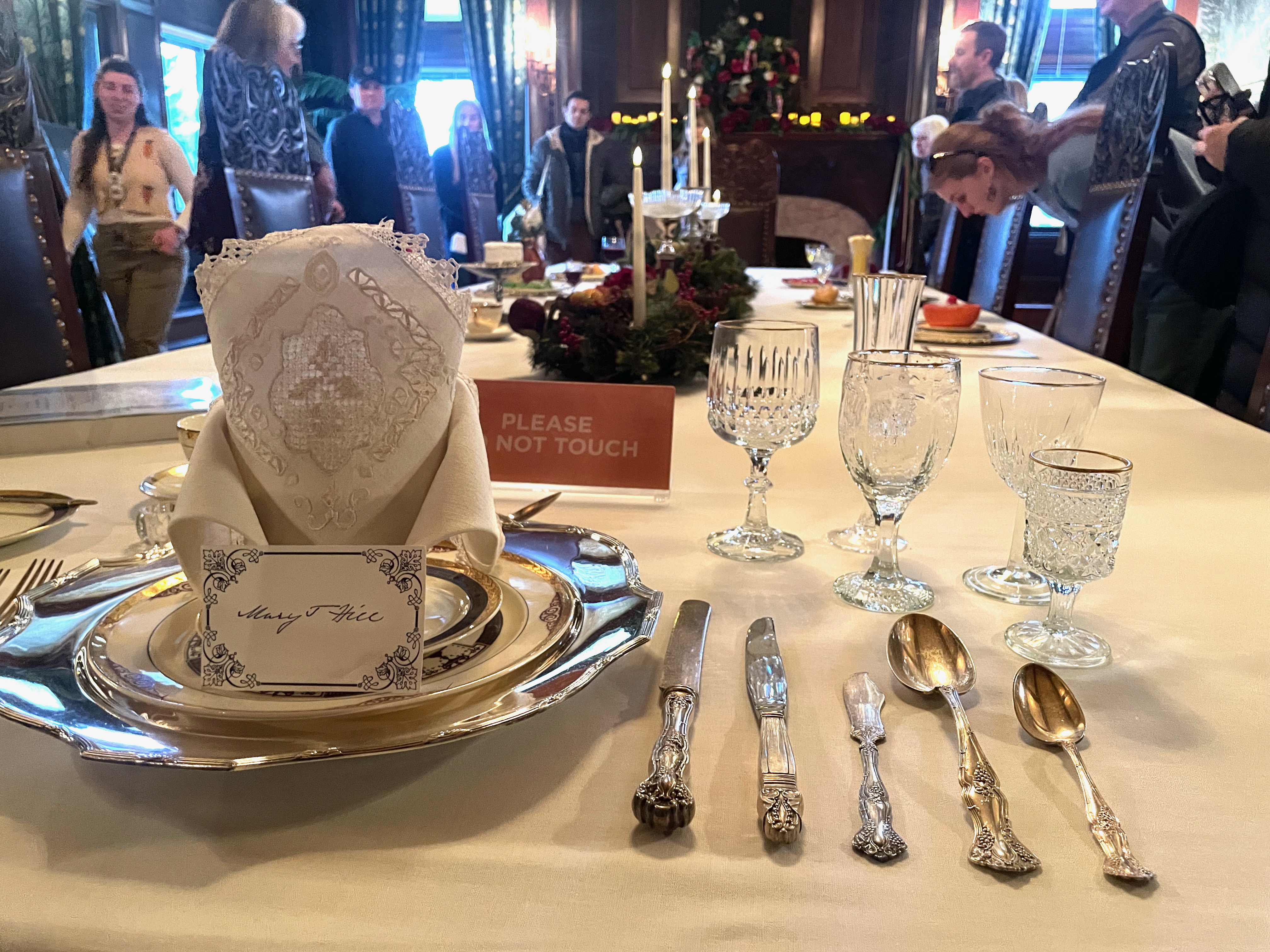
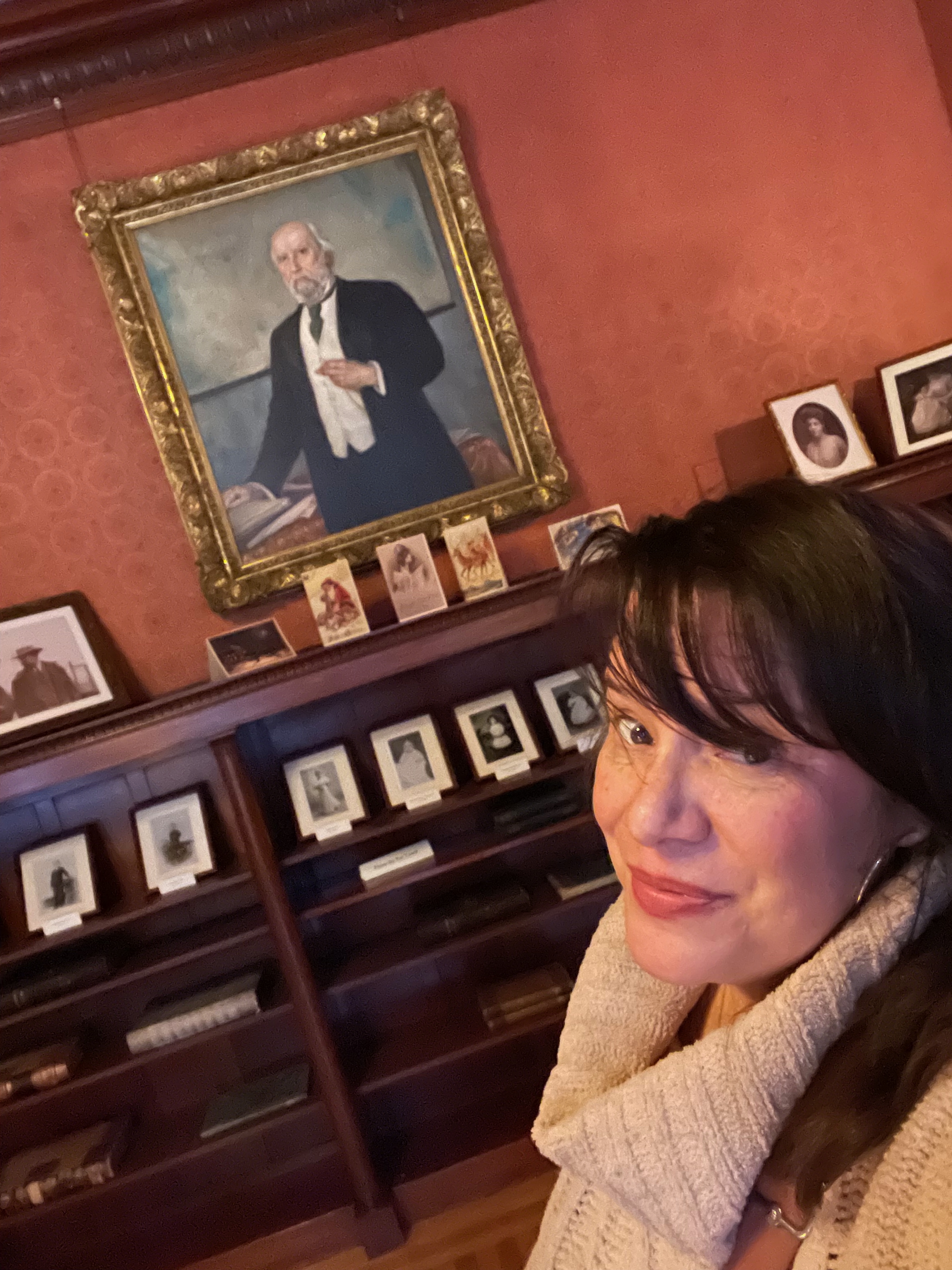
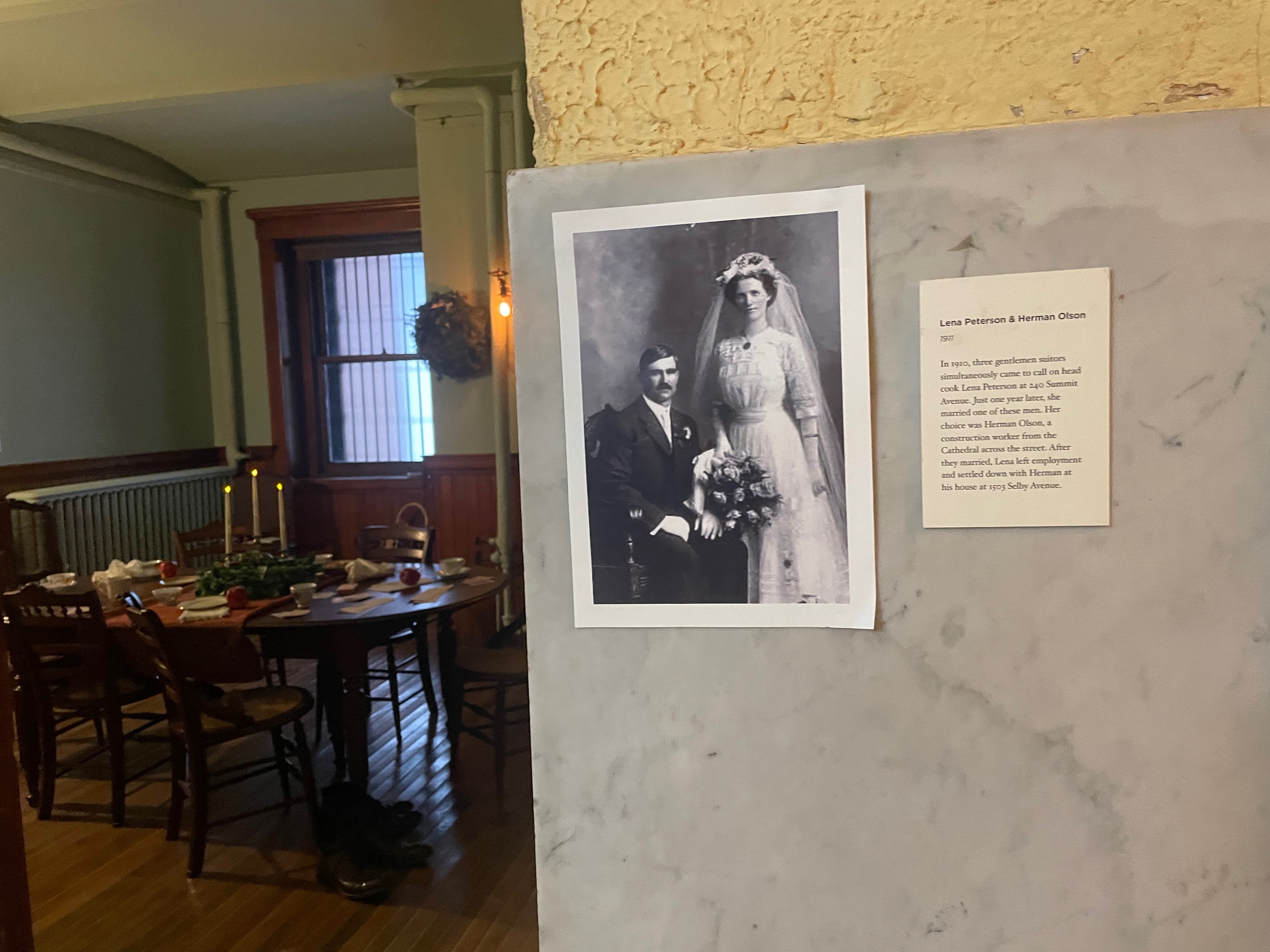
Loved seeing the displays about the maids, cooks and seamstresses that worked in this Summit Avenue mansion. Tour guides even read from the archived letters of Second Cook Celia Tauer, which helped bring to life the histories of the domestic workers in the Hill House.

Creekside Supper Club
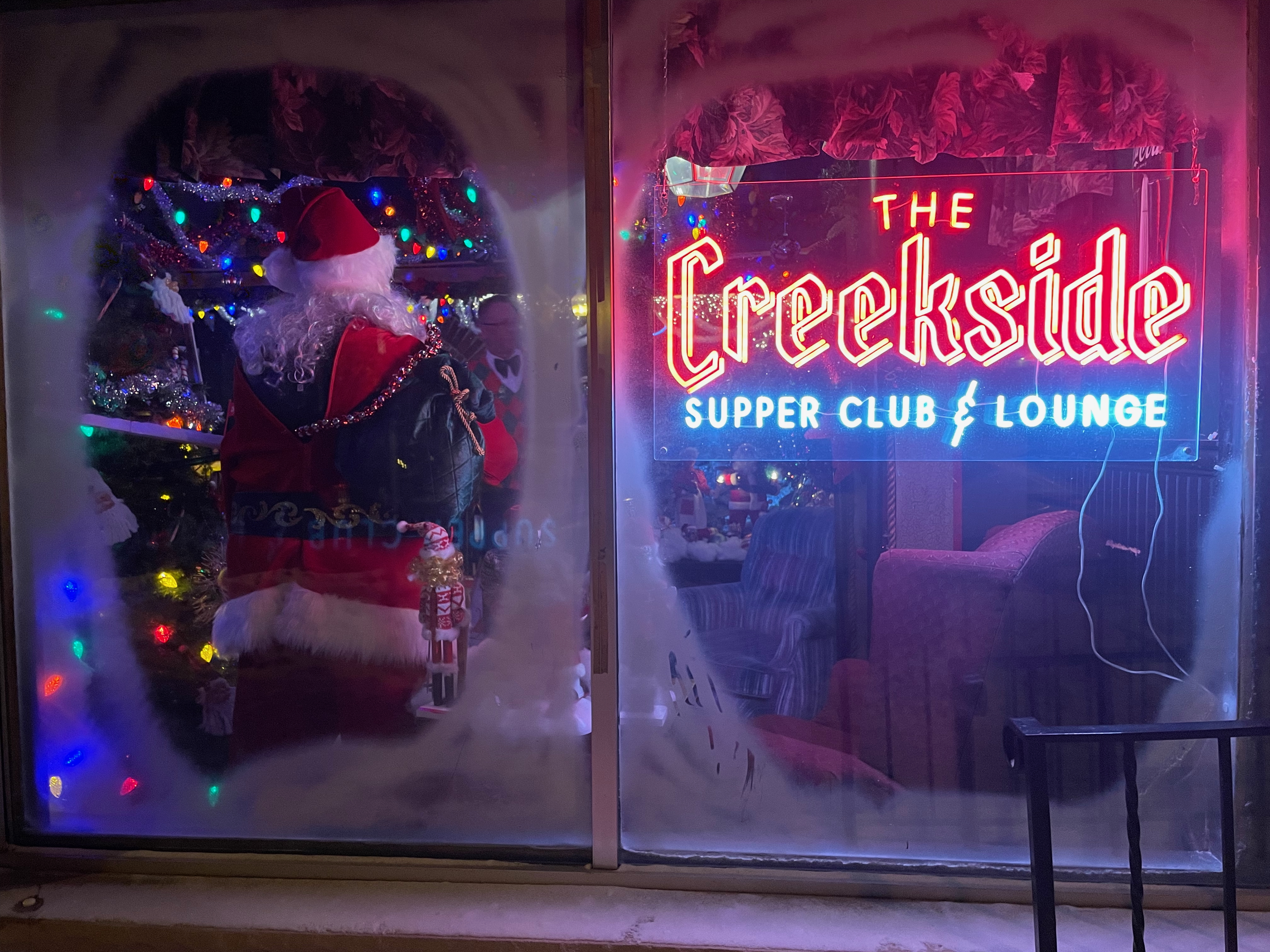
Dining at the Creekside Supper Club on Chicago Avenue felt like dining in Santa’s workshop. While this eatery formerly known as Pepito’s is not technically a historic spot, it’s situated next door to the historic Parkway Theatre, where my young mom and her family watched their Hollywood movies in the 1950s.

St. Paul’s Landmark Center
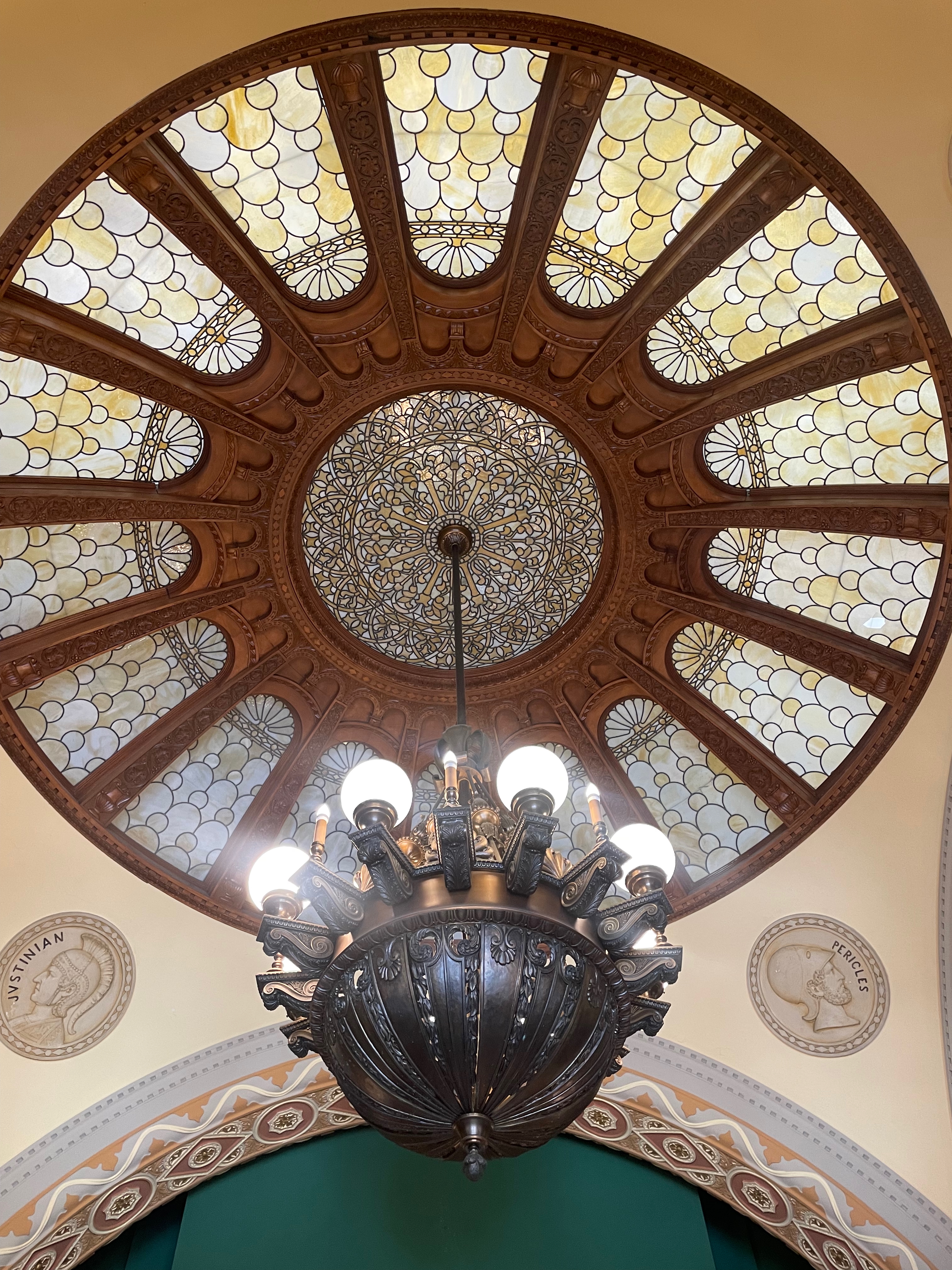
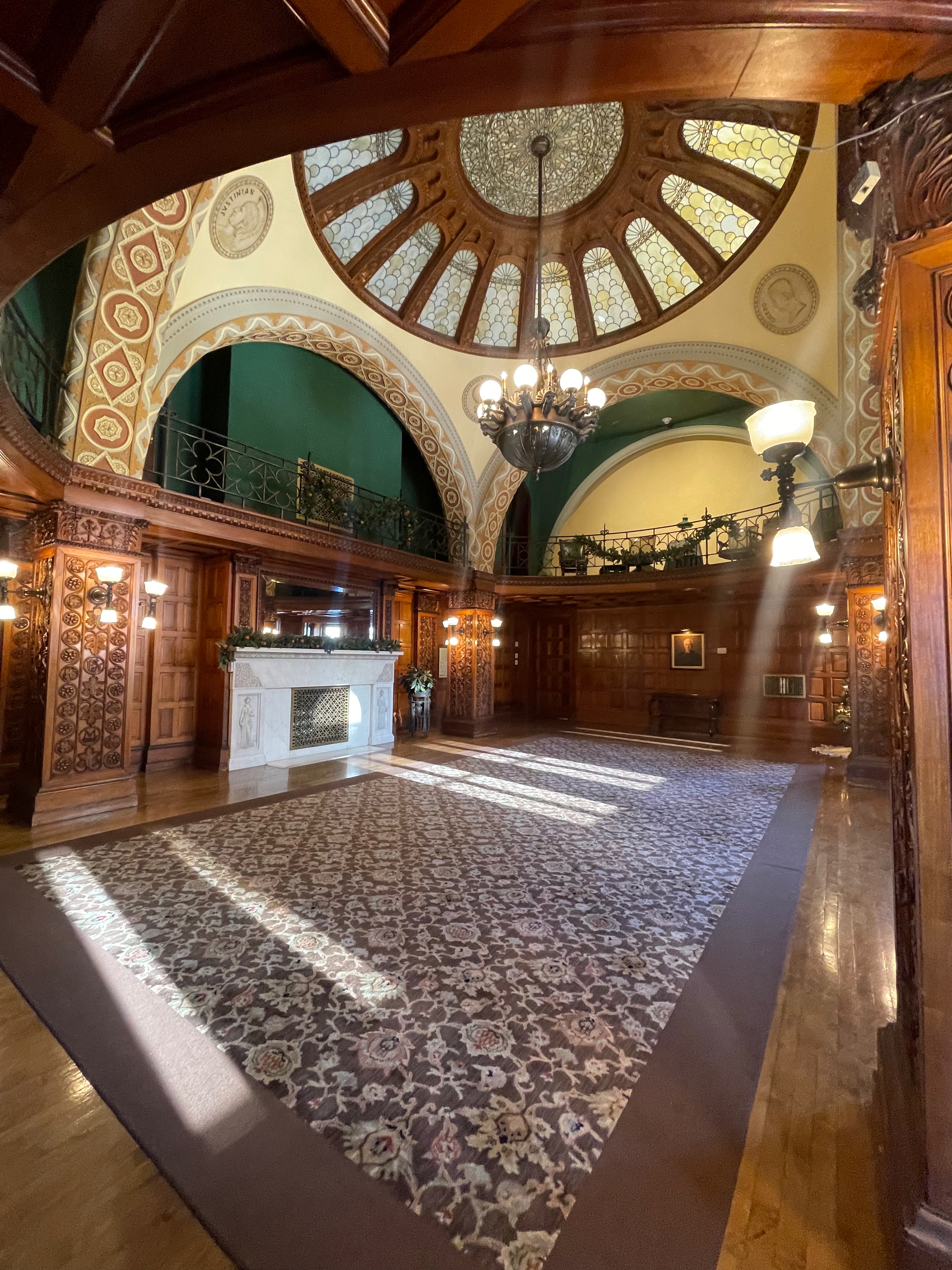
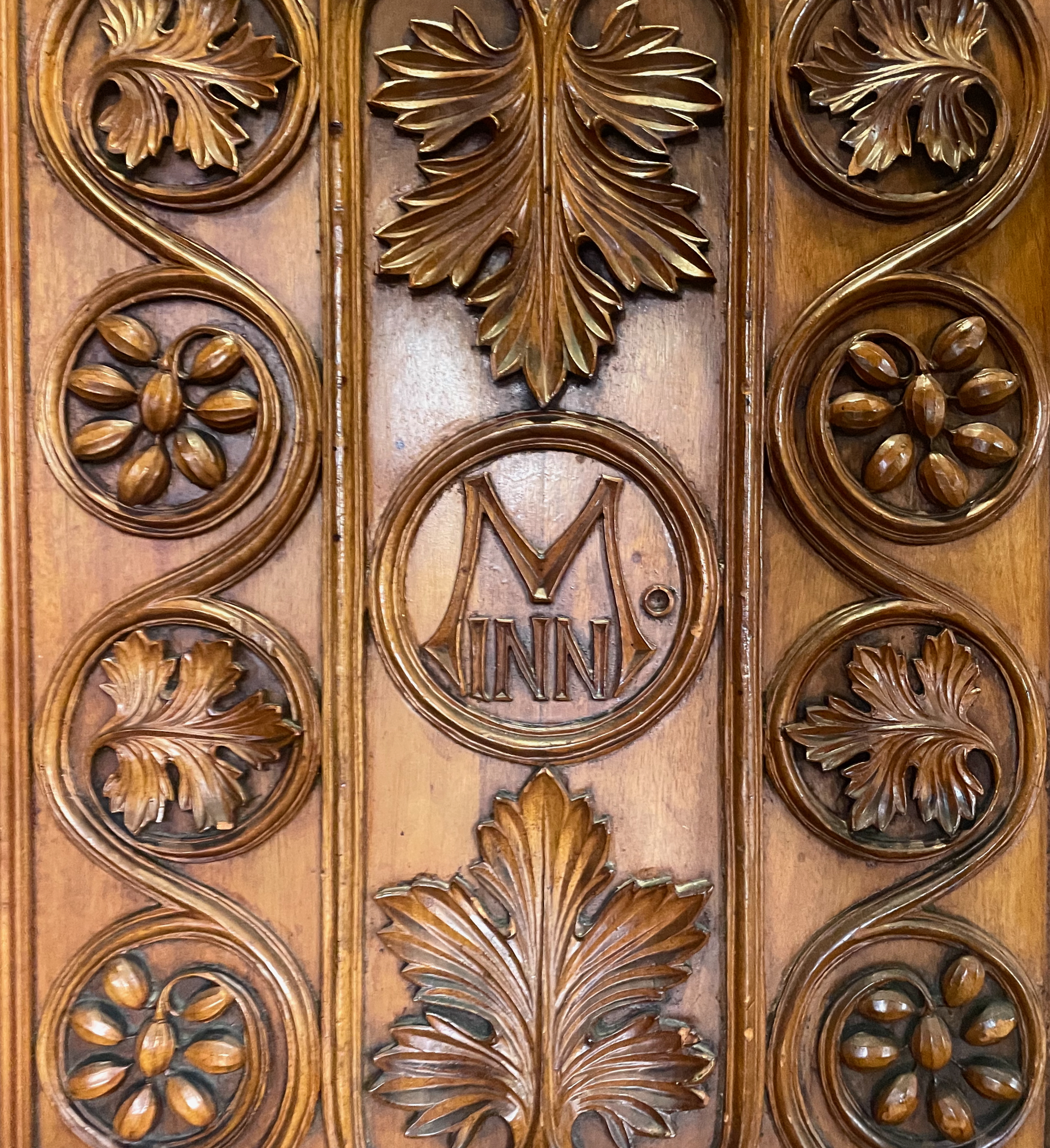
Built in 1902, St. Paul’s Landmark Center was one of the first structures from Minnesota to be listed on the National Register of Historic Places (1969) as it served as the federal courthouse and post office until the 1960s-1970s.

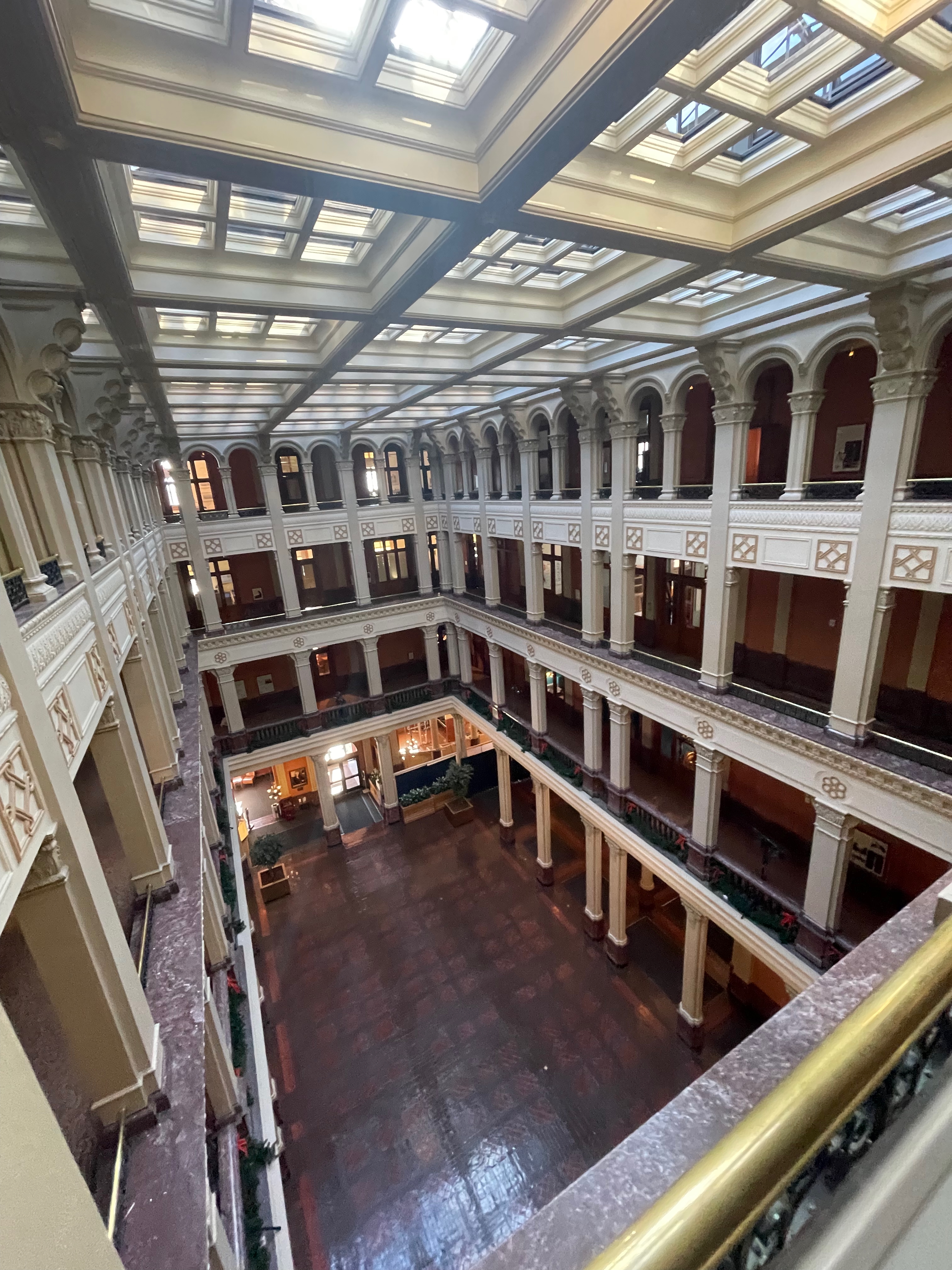
We certainly don’t have old courtrooms like this in Los Angeles (if we did, they would’ve been in the Red Sandstone Courthouse demolished after the 1933 earthquake). I’m in awe of this law-library-turned-courtroom.
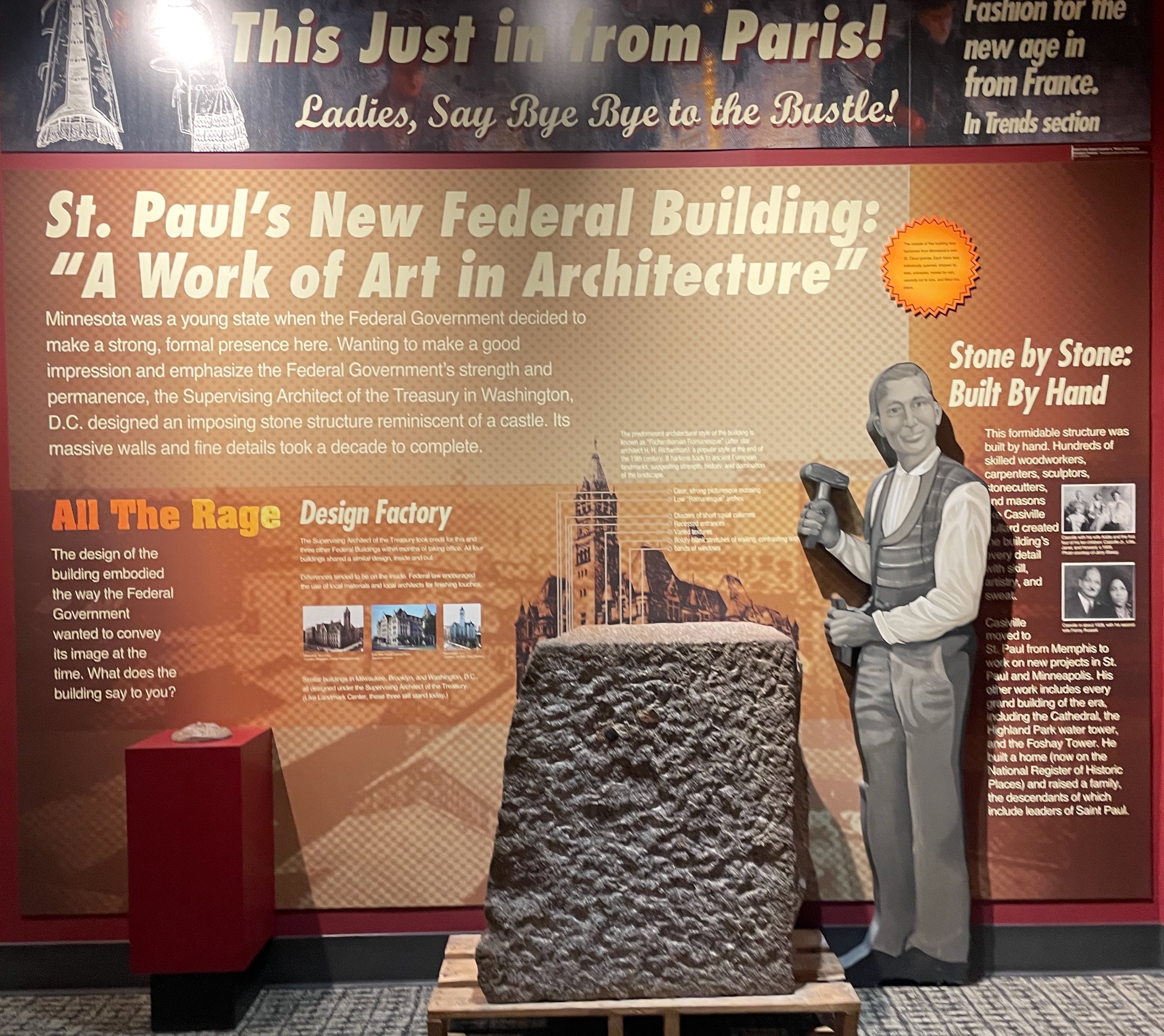
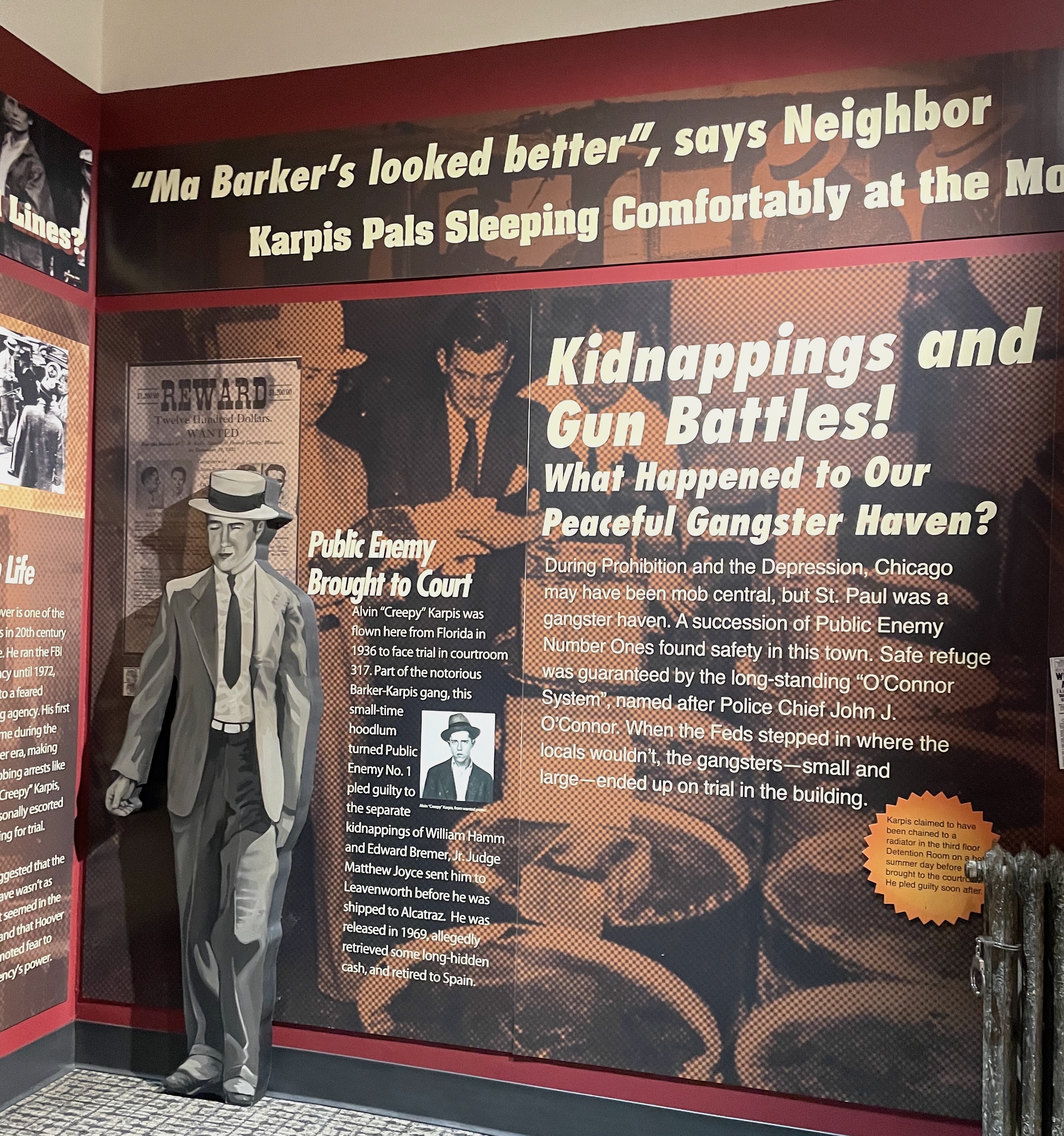
The basement was full of mobster stories and exhibits to illustrate St. Paul’s gangster past. Was fascinated by this excerpt from the Landmark Center’s display:
“Long time St. Paul Police Chief John J. O’Connor had an understanding with the criminal underworld. O’Connor and his successor, Thomas A. Brown, let it be known that wanted criminals could hide out in St. Paul as long as they kept their noses clean in Ramsey County. John Dillinger, Alvin ‘Creepy’ Karpis, ‘Babyface Nelson’ Gillis, ‘Machine Gun Kelly’ Barnes and the ‘Ma’ Barker gang all took the ‘public enemy’ reputations to St. Paul in the 1930s to lay low between jobs.”
Would’ve loved to have taken the Landmark Center’s Gangster Ghost tour in October!
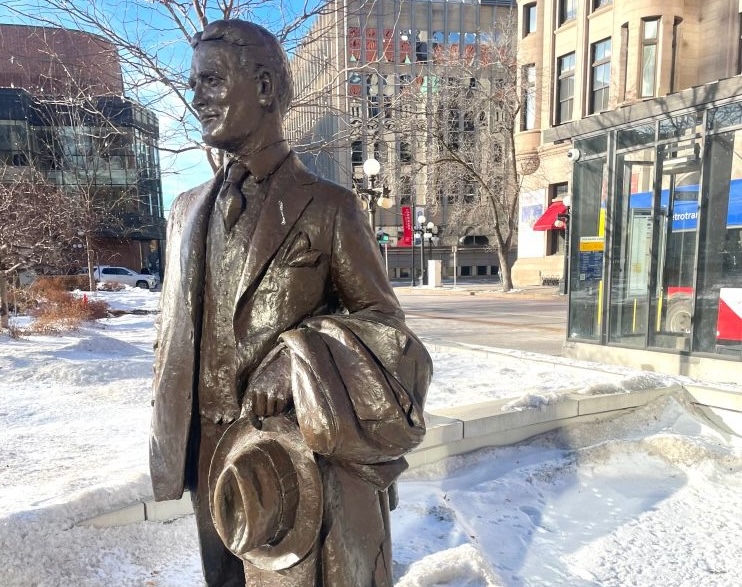
F. Scott Fitzgerald in St. Paul’s Rice Park
While walking through Rice Park on December 21, we stumbled upon this statue of St. Paul’s native son, writer F. Scott Fitzgerald. This date is notable as it’s the anniversary of his passing in California. On December 21, 1940, F. Scott Fitzgerald died in West Hollywood apartment of his mistress Sheilah Graham. His likeness is situated in Rice Park, St. Paul’s oldest public space given to the city in 1849.
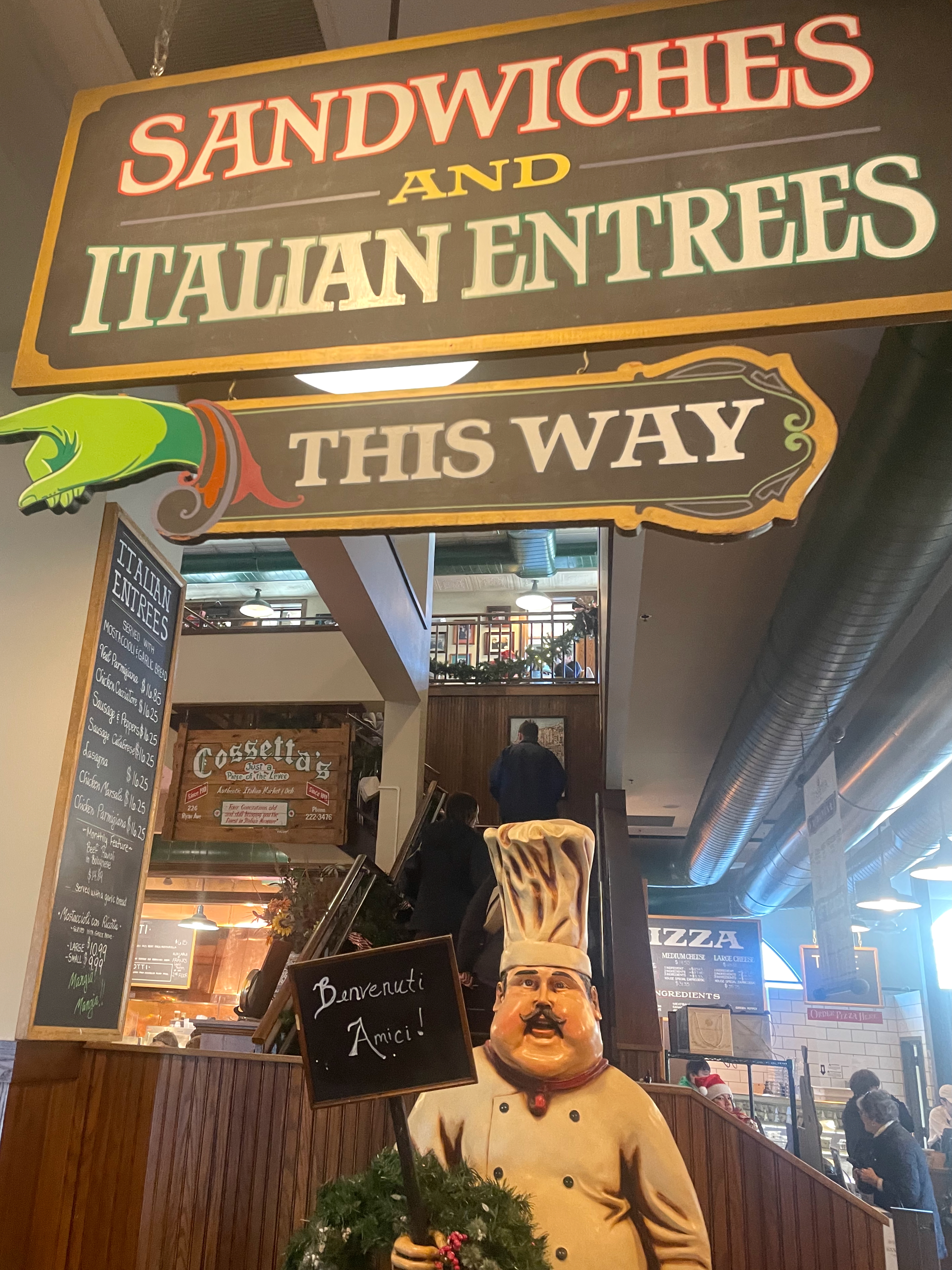
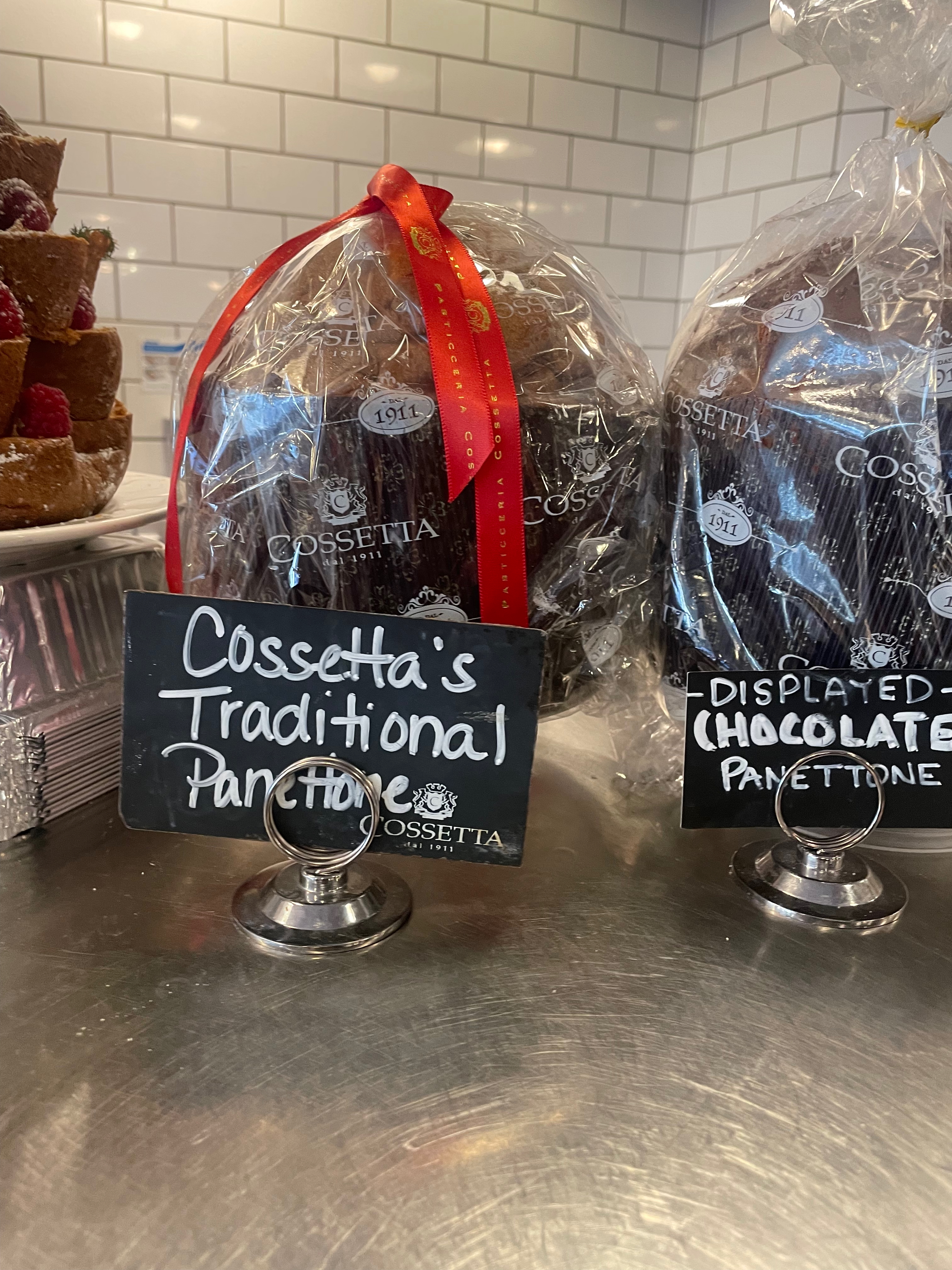
Cossetta’s in St. Paul’s Little Italy
Established in 1911, Cossetta’s has long been a staple of St. Paul’s Little Italy. And based on the crazy crowds at this place on the Sunday before Christmas, it still is. Cossetta’s award-winning panettone is not only in demand locally, but nationally as this pastry “took home first place in the Americas Division at the Coppa del Mondo del Panettone” (didn’t even know there was a Coppa del Mondo del Panettone).

Mercado Central
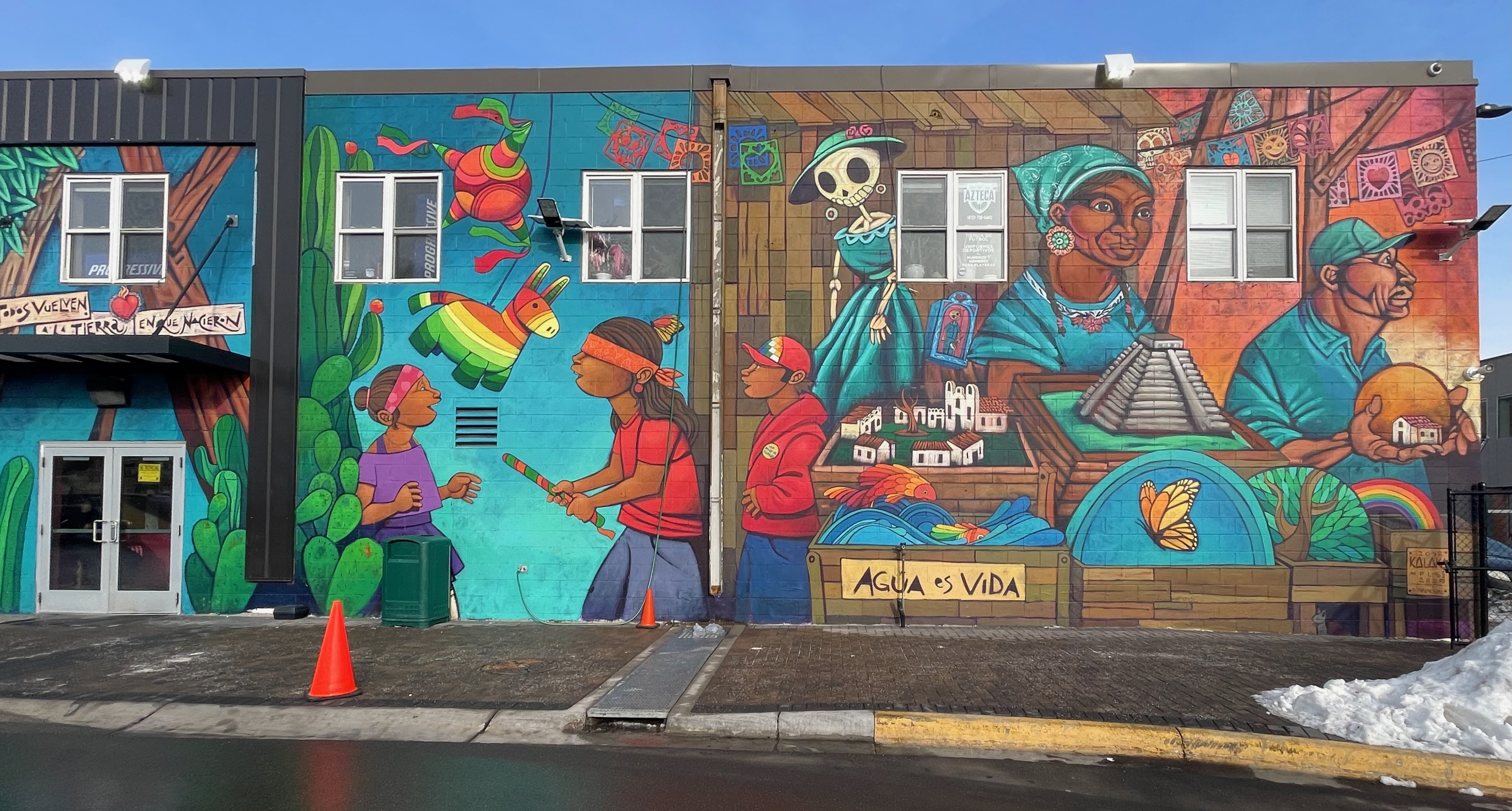
And lastly, here’s a shout out to Lake Street’s Mercado Central! When I’m in Minneapolis, always try to pick up some tamales at La Loma, a great Mexican spot inside this colorful cultural center. The murals on this building (by artist Pablo Kalaka) and in this neighborhood were amazing! And, I’m still thinking about that red Oaxaca tamale.

 Victoria Bernal
Leave a comment